

The International Wall Street Training Program is our flagship course for college students, MBAs, and working professionals who plan to excel in corporate finance, capital markets, business strategy, and entrepreneurship. The curriculum has been carefully designed to prepare our participants for front-office positions in the corporate finance industry.
Swiss Finance Academy utilises a combination of lectures, group projects, team presentations, workshops, case studies, and simulations to provide participants a comprehensive experience and a solid understanding of international finance and business strategy. Our faculty members are seasoned industry executives passionate about teaching and mentoring, and their lectures are full of examples from their own experiences offering deep insight into the reality of daily work on Wall Street.
Our training goes beyond even the comprehensive programs that investment banks offer their new analysts and associates. In-house programs are largely run by professors who, while proficient in theoretical finance, have limited transaction experience. Our programs, on the other hand, are taught by executives who possess tremendous transaction experience and have conducted extensive industry training at bulge bracket investment banks.
Develop comprehensive perspectives on global macro events and economic development from an investment banker's point of view. Study hedge fund strategies including global macro, risk arbitrage, fixed income arbitrage, managed futures, equity hedge, statistical trading, and convertible arbitrage.
A rigorous introduction to the fundamentals of corporate valuation, from comparables-based analysis and DCF to LBO structuring for private equity. Apply concepts to actual company valuations using case studies and real-life examples from billion-dollar transactions.
Build integrated financial models for DCF, comparables, and EVA valuation. Enhance models for working capital and sensitivity analysis. Refine them for IPO, M&A, LBO, distressed debt deals, and hedge fund trades, then create professional pitch books and client presentations.
Learn how the international capital markets work country by country and asset class by asset class, so that you can move capital around the world, make complex and sophisticated decisions promptly, and thrive in change.
The curriculum covers the economics, geopolitics, history, and geography of investing, from currency analysis and sovereign risk to macro secular trends and forensic accounting. Students learn security selection, capital allocation, timing, position building, stop-loss management, and how money flows around the world.
We examine the current state of the US, UK, EU, Swiss, Chinese, and other major economies. What does it mean for an economy to perform well? How do employment, wages, interest rates, inflation, and consumer spending relate to each other in the economic cycle?
People who follow conventional wisdom or others' ideas end up funding accounts of those who despise such advice. We teach you to rely only upon your own judgment.


Valuation is one of the core corporate finance responsibilities of an investment banker. This module provides a rigorous and thorough introduction to the fundamentals of corporate valuation, from invested capital and firm value multiples to EVA analysis and sum-of-the-parts valuation.
Students study comparables-based valuation, precedent transaction multiples, pro-forma adjustments, valuation discounts and premia, and the impact of market conditions on valuation. Case studies based on professional experience, including the TPSA secondary share sale and the E-Plus comparables analysis, bring the theory to life.
The module covers IPO mechanics, M&A synergy valuation, LBO structuring for private equity, venture capital, and commercial banking. Students learn how investment banks price deals, retain corporate clients, and why investment banking remains one of the most lucrative professions in finance.
From the RJR Nabisco case study to K-Mart vs. Wal-Mart EVA analysis, every concept is grounded in real-world transactions.
This segment involves building a financial model of a hypothetical client, performing sensitivity analysis and valuation, acquiring a target, and conducting related EPS calculations, including M&A accretion and dilution analysis.
Students receive Excel training on the techniques and shortcuts that investment bankers use, then build integrated financial models for DCF, comparables, and EVA valuation. Models are enhanced for working capital analysis and sensitivity analysis, then refined for IPO, M&A, LBO, distressed debt deals, and hedge fund trades.
The module culminates in creating a professional full-colour pitch book and preparing a presentation to a corporate client. Classroom instructions on technical modelling are directly related to capital market research and deal negotiation exercises.
Apply to the Program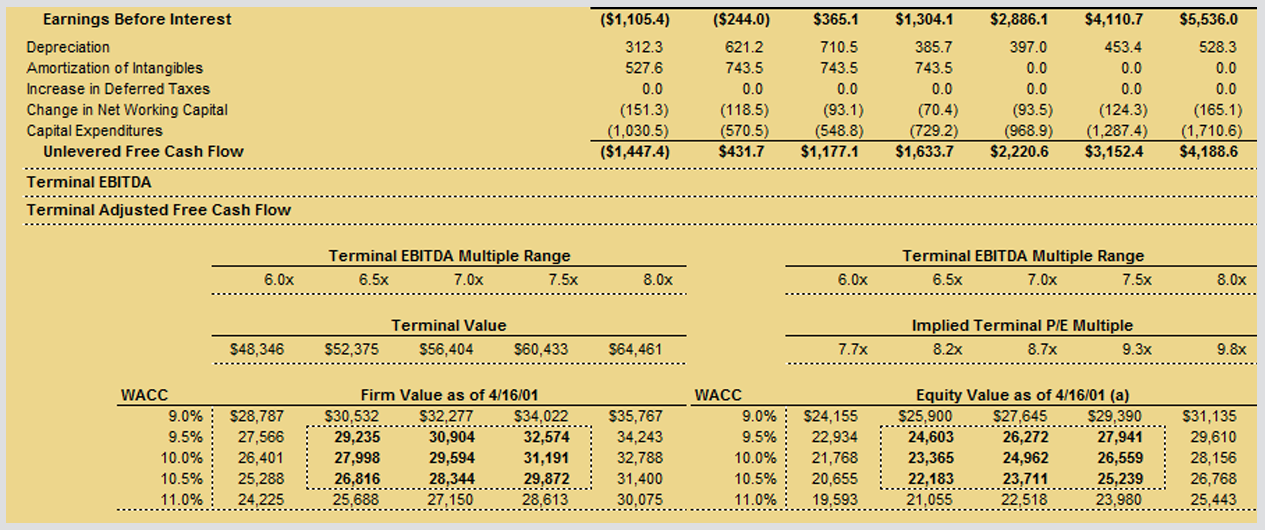
"The independent research projects were intellectual and challenging. In less than two days packed with lectures, readings, and preparations for the final restructuring deal, we prepared a detailed presentation to potential investors about a hybrid security that we were unfamiliar with. Having limited time and resources at our immediate disposal, a scenario not different from the daily investment banking routine, we made careful assumptions, logical conclusions, and qualifications to our opinions where needed, and presented to a group of experts. Many valuable lessons were learned."
Exams help identify areas of improvement, serve as a learning experience, and form a basis for formal evaluations of each participant's progress.
Deal-team simulations mirror the "beauty contests" and negotiations conducted by investment banks with their clients, investors, and competitors on pricing and structuring of deals.
Industry sessions offer insight into global employment markets in finance and help hone the communication skills needed to get hired and promoted at top-tier institutions.
The collaborative learning environment sets the overall tone of our Academy. Program pace is fast but also determined by students' familiarity and comfort with new concepts.
Our programs offer a blend of theory, advanced industry technical knowledge, and behavioural training that allows students to form a strong foundation. Students attend lectures, work in groups to learn about actual deals, build robust financial models, solve hypothetical client problems, and prepare formal investment banking pitches and presentations.
Lectures and training classes are held for six to nine hours every day. Additionally, students work in groups as well as independently for several hours in the evenings. Assigned readings and case studies are selected for richness and practical relevance.
Similar to many investment banks, our programs do not require participants to possess formal knowledge of finance or business, many of our accepted applicants are majoring in areas such as sciences, mathematics, and even literature. A comprehensive coverage of fundamental concepts ensures that within a few days participants become fluent in finance.
We also offer realistic investment banking and capital markets simulations, the closest you can get to the real thing without being on the trading floor.


To supplement the academic components and to equip students with proven advancement strategies, we conduct Wall Street interview training and resume review sessions. Executive coaches hold personalised sessions and group exercises that are far more advanced than conventional career workshops.
One key attribute sets successful candidates apart during their investment banking, asset management, and strategy consulting interviews: social skills. Style is at least as important as content. One must be articulate, have confident body language, and know what to say, and perhaps more importantly, what not to say.
Swiss Finance Academy estimates that 95% of university applicants fail to do their homework before important interviews. Our students succeed because they arrive fully equipped with the right knowledge, tools, and attitude. By the end of their training, they project themselves as knowledgeable, polished, and sophisticated professionals.
Fewer than 1% of all applicants are chosen for investment banking analyst and associate positions each year. Our students prepare for that competition with the skills it rewards.
Swiss Finance Academy programs are by application only. We select for ambition, intellectual curiosity, and the capacity to thrive in a high-performance environment. Our students succeed because they arrive fully equipped with the right knowledge, tools, and attitude.
Apply Now